
If you’ve landed on this page you are most probably looking for ways to prevent gestational diabetes.
You may be pregnant and would like to find ways to prevent gestational diabetes from developing, or you may have had gestational diabetes in a previous pregnancy and are looking to see if there are ways to prevent gestational diabetes in your subsequent pregnancy or pregnancies.

What causes gestational diabetes?
First, let’s look at what causes gestational diabetes. It’s helpful to know this if we are looking at how to prevent gestational diabetes.
The actual CAUSE of gestational diabetes is unknown. However, we do know that during pregnancy, the body produces a number of hormones, such as oestrogen, progesterone and human placental lactogen (HPL). These hormones make the body insulin resistant, which means cells respond less well to insulin and the level of glucose in the blood remains high.
To cope with the increased amount of glucose in the blood, the body should produce more insulin. However, some women either cannot produce enough insulin in pregnancy to transport the glucose into the cells, or their body cells are more resistant to insulin. When this happens, blood glucose levels remain too high. This is where the mother is diagnosed with gestational diabetes.

Some people have a higher risk of developing gestational diabetes
You have an increased risk of gestational diabetes if:
- your body mass index (BMI) is 30 or more
- you have previously had a baby who weighed 4.5kg (10lbs) or more at birth
- you had gestational diabetes in a previous pregnancy
- you have PCOS (polycystic ovarian syndrome)
- you have a family history of diabetes – one of your parents or siblings has diabetes
- your family origins are South Asian, black Caribbean or Middle Eastern
- you are aged 35 or older
What is on the list above that can be changed to reduce the risk of developing gestational diabetes?
There’s only ONE thing on the list of risk factors that can be changed and it’s BMI. Everything else we have absolutely no control over and therefore cannot impact.
Diet and preventing gestational diabetes
By making dietary changes to lose weight and control blood sugar levels before conceiving, those that have a high BMI may reduce the risk of developing gestational diabetes during pregnancy.
According to the research done so far, the only women who benefit from dietary changes are those who are overweight or obese. They can lower their risk of gestational diabetes by changing their diet with the help of a professional dietitian or nutritionist. The dietary changes can reduce their blood sugar levels and help them put on less weight in pregnancy. In women who have a normal weight, dietary changes don’t have a preventive effect. Research has shown the following for women who are overweight (BMI > 25) or obese (BMI > 30): If they didn’t change their diet, 16 out of 100 women were diagnosed with gestational diabetes. If they did change their diet, 6 out of 100 women were diagnosed with gestational diabetes.
What can help prevent gestational diabetes? Institute for Quality and Efficiency in Health Care (IQWiG) 2020

If you have low or normal BMI, according to research done so far, making dietary changes and exercising makes no difference to developing gestational diabetes.
What type of diet is needed?
A general well-balanced, real food diet that can encourage weight loss is advised, but in the knowledge that carbohydrates raise blood sugar levels, it can be beneficial to follow a lower-carb diet in order to improve blood glucose levels and insulin resistance too.
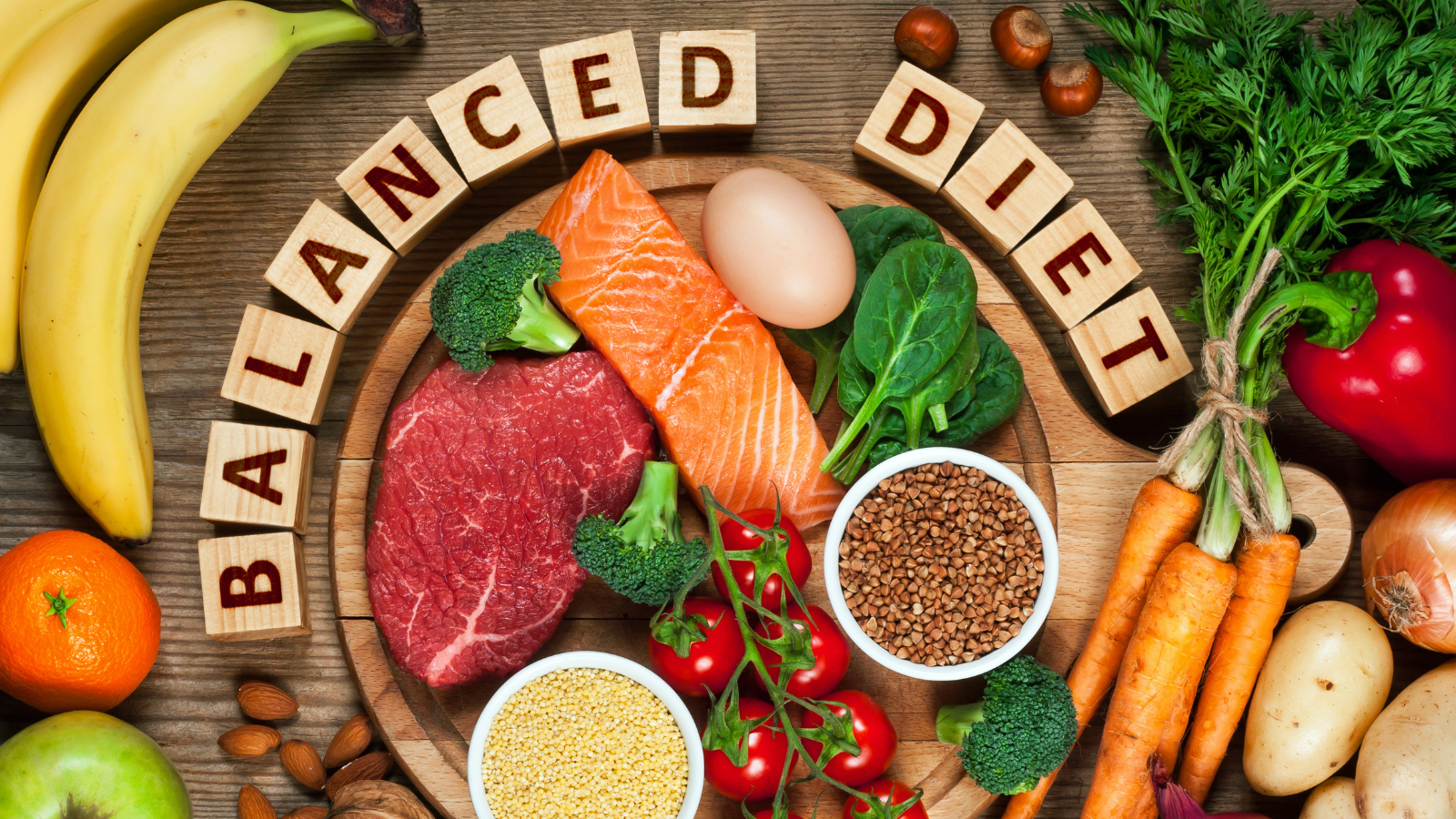
Individual dietary advice can be beneficial, therefore, seeking support for individual specialist diet and nutrition information from a registered dietitian can be worthwhile. This can be sought by asking for a free NHS referral from your GP or by paying for a private registered dietitian‘s services.
Please note: Weight loss DURING pregnancy is not recommended, therefore weight loss for those that have high BMI is encouraged before conception.
It’s important to remember that losing weight if you have a high BMI can reduce the risk of developing gestational diabetes, but it is not a guarantee or a way to fully ‘prevent’ gestational diabetes. However weight loss when you have a high BMI obviously has many health benefits.

Exercise and preventing gestational diabetes
Exercise has been shown to reduce the risk of developing gestational diabetes in both those who are overweight and obese, as well as those that have normal BMI!
Studies on women with a normal weight found the following: 5 out of 100 women who didn’t get much exercise were diagnosed with gestational diabetes, compared to 3 out of 100 women who exercised more.
What can help prevent gestational diabetes? Institute for Quality and Efficiency in Health Care (IQWiG) 2020
Doing at least 30 minutes of strenuous activity three to four days per week is recommended as being enough to lower blood sugar levels.

Dietary supplements and preventing gestational diabetes
You may see many different dietary supplements or foods promoted as ways to prevent gestational diabetes.
Whilst some dietary supplements have been proven to reduce the risk of gestational diabetes, others have no actual evidence to suggest they are truly beneficial.
Vitamin D and Myo-inositol supplementation
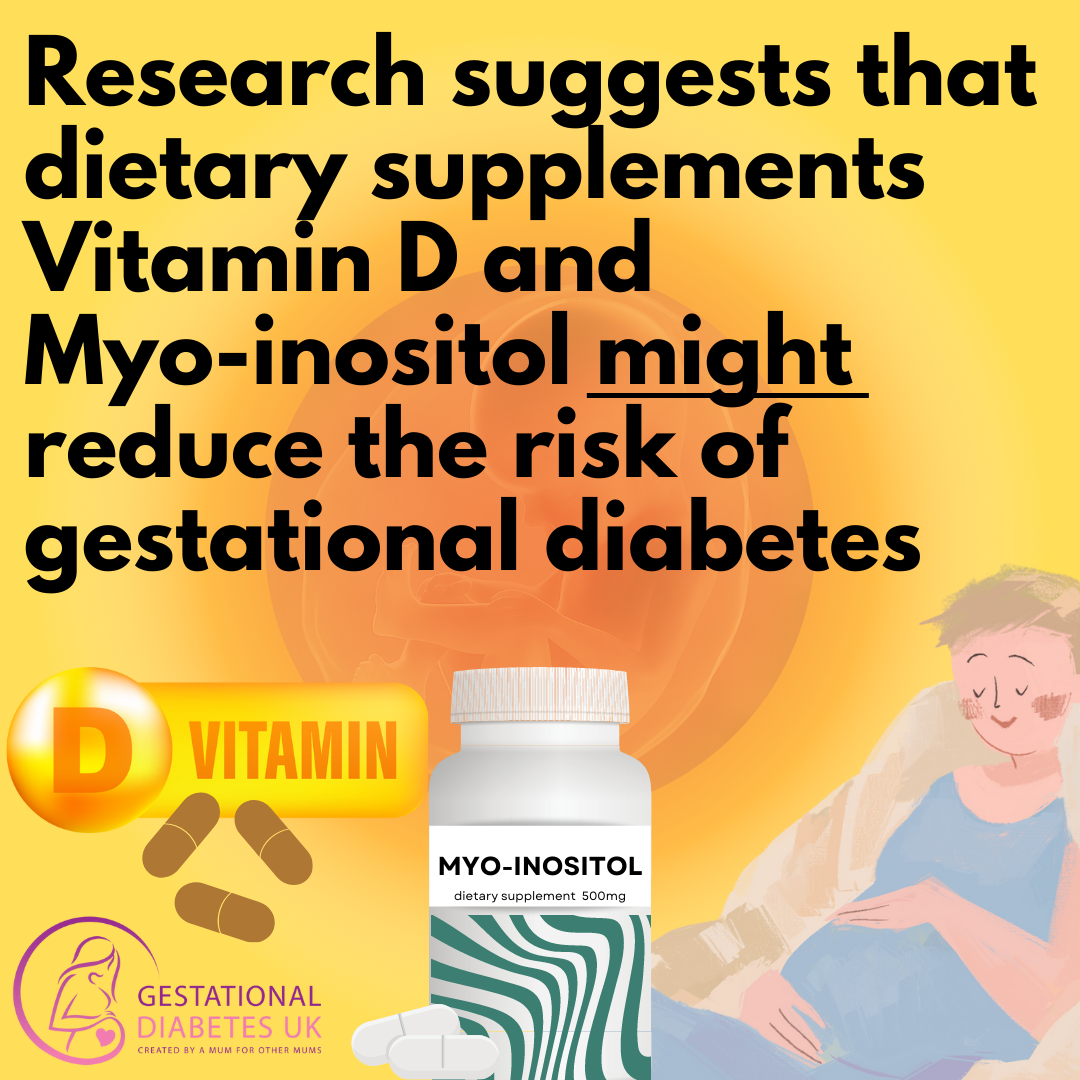
Two dietary supplements which have evidence showing that they may reduce the risk of developing gestational diabetes are Vitamin D and Myo-inositol.
In a meta-analysis of 53 randomised controlled trials with 9443 pregnant women, Vitamin D and Myo-inositol supplementation was shown to significantly reduce the risk of GDM:
Vitamin D supplements reduced the risk of developing GD by 36%. Myo-inositol reduced GD by 66%
Dietary supplementation for gestational diabetes prevention and management: a meta-analysis of randomized controlled trials Kwan Yi Chan,et.al, 2021
Check with your GP if Vitamin D and Myo-inositol supplements are suitable for you to take before pregnancy and ask for advice on the correct dosage for you.
Take home message: You CAN NOT fully prevent gestational diabetes!
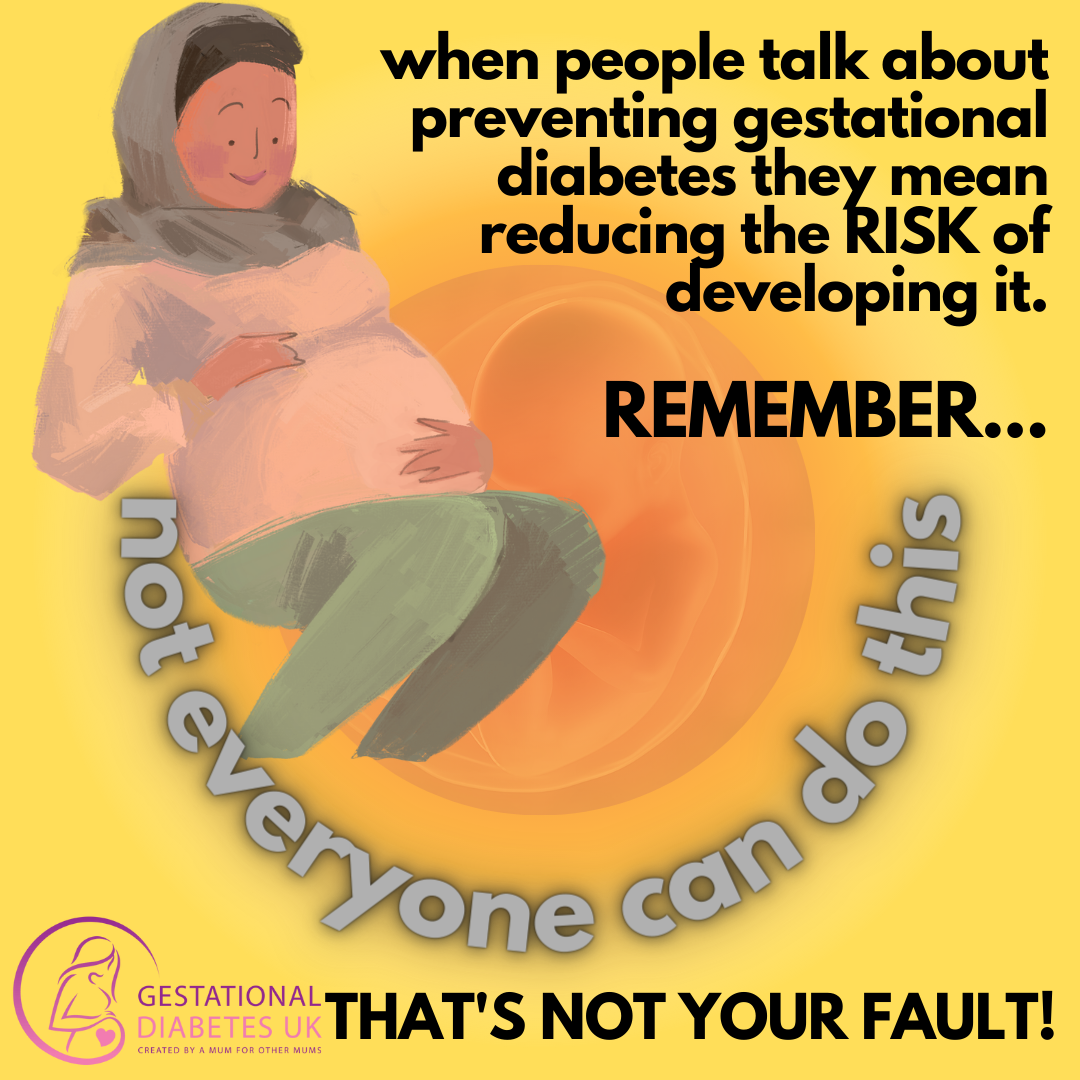
Watch out for people telling you they can prevent gestational diabetes
If you are being told by someone (even a professional such as a registered dietitian, nutritionist, or personal trainer) that they can prevent you from getting gestational diabetes, please be mindful that certain things as mentioned in this post may help reduce the risk of developing gestational diabetes, BUT nothing and no one can fully prevent you from developing gestational diabetes.
If you are looking to become pregnant following a previous gestational diabetes pregnancy, please take look at my post on the second gestational diabetes pregnancy for more information on testing and diagnosis.
If you are diagnosed with gestational diabetes, IT’S OKAY! Gestational Diabetes UK is here for you. Please start on this page for support information.